
From AI-generated tests to compiler-verified, executable evidence.
Embedded C Gemini Docker Jenkins GitHub
| 40 modules tested for real | 99.0% line coverage | 97.4% branch coverage | 0 clicks to start a run |
The Pipeline
From a new release to a published dashboard.
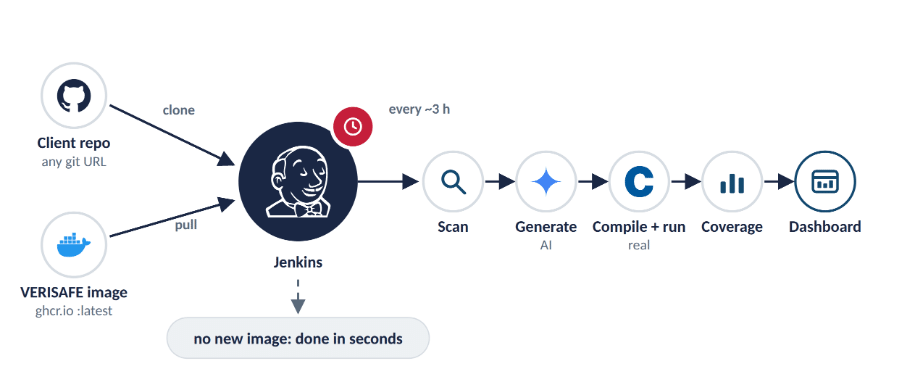
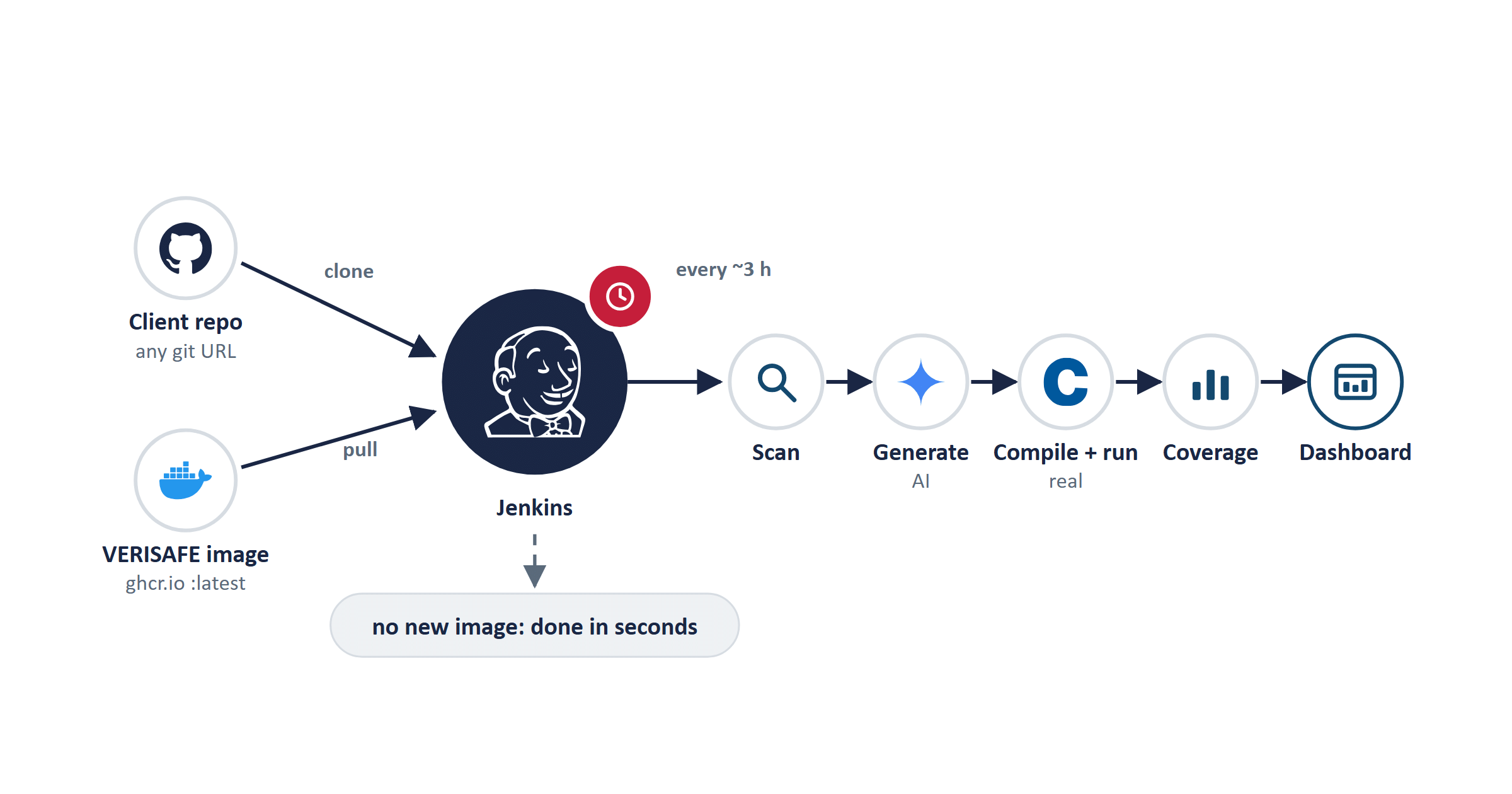
Whole pipeline, one job. Triggered by a timer, runs only when there is something new.
A client repository (any git URL) and the VERISAFE image are pulled by Jenkins on a timer, roughly every three hours. Jenkins then runs the pipeline end to end: scan, AI-generate tests, compile and run them for real, compute coverage, then publish a dashboard. If there’s no new image, the run finishes in seconds.
AI Proposes. The Compiler Decides.
Nothing the AI writes is trusted until it runs.
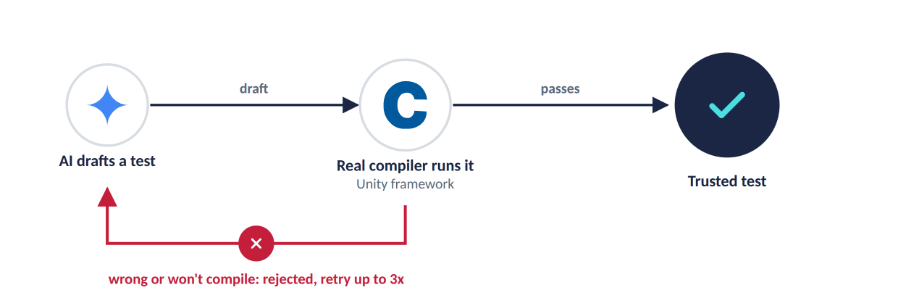
The compiler decides, not the AI.
The AI drafts a test, and a real compiler (the Unity framework) builds and runs it. If it compiles and passes, it becomes a trusted test. If it’s wrong or won’t compile, it is rejected and retried — up to three times.
Before and Now
Same tests. The trigger is what changed.
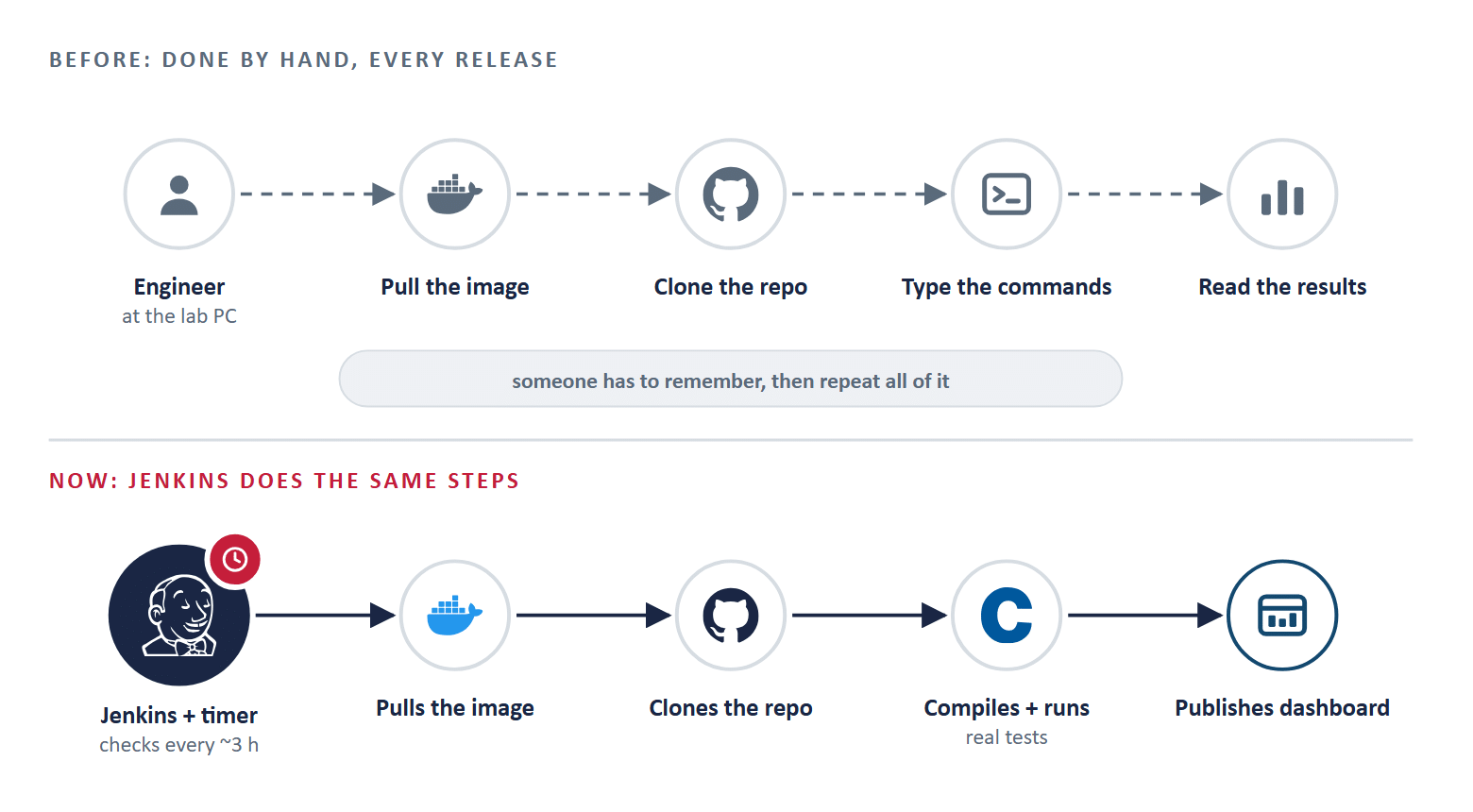
The trigger moved from a person to the pipeline.
Before: someone had to remember to open Jenkins and click Build, and tests ran maybe. Now: a timer checks for a new image, Jenkins tests it automatically, and the dashboard is published on its own.
One Engine, Four Ways to Run It
Each step removed a manual step.
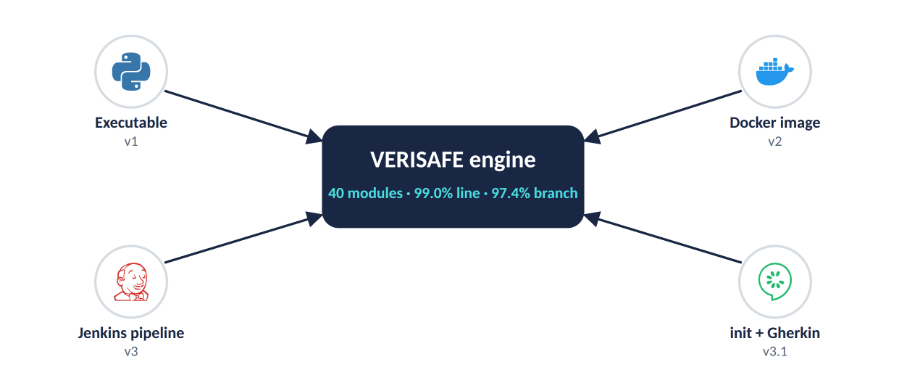
Four ways to run it, one engine, so the numbers match everywhere.
The same VERISAFE engine (40 modules, 99.0% line / 97.4% branch coverage) can be run as a standalone executable (v1), a Docker image (v2), a Jenkins pipeline (v3), or via init with Gherkin (v3.1) — all converging on identical results.
Polling on Purpose
Why we did not open an inbound door to Jenkins.
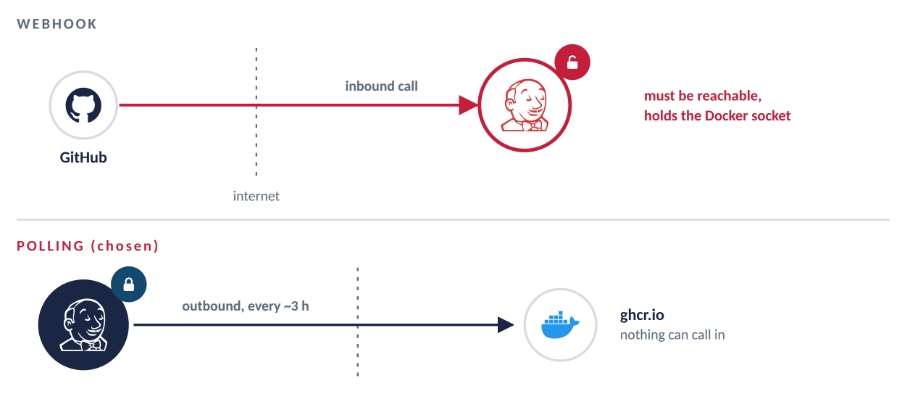
The difference is which way the connection points. Polling trades a few hours for zero new inbound doors.
Webhook: GitHub calls in across the internet to a Jenkins instance that must be reachable and holds the Docker socket. Polling (chosen): Jenkins calls out to the registry every ~3 hours — nothing can call in.
What You Get

- No hardware needed — tests run on any machine with Docker.
- Any repo URL — add a line to a config file.
- New release, tested — detected and run automatically.
- Nothing faked — blocked code is reported, not hidden.
Limits: AI output varies by codebase, and coverage is not ISO 26262 compliance. Results shown are from an NXP S32K144 automotive ECU codebase.
Links that would also help you in understanding better: https://www.requisimus.com/building-an-ai-driven-ci-cd-pipeline-with-multi-repository-integration/
For more information contact
Name: Soundarya Mahadev
Email: Soundarya.mahadev@requismius.com