What is Calibration?
Calibration is the process of comparing measurements from a device under test (DUT) against a reference standard of known and traceable accuracy and then adjusting or documenting any differences.
What is ECU Calibration?
In the automotive industry, the adjustment of control unit parameters is referred to as calibration. This is an iterative process in which parameters are changed during runtime and their effects are observed by measuring internal control unit variables. The aim is to achieve the desired system behavior.( Reference: https://www.vector.com/in/en/products/application-areas/ecu-calibration/#)
ECU calibration data consists of specific, adjustable parameters, maps, and lookup tables stored in the Electronic Control Unit (ECU) that dictate engine behavior, such as fuel injection, ignition timing, and boost pressure. The data is tuned to optimize vehicle performance, emissions, and fuel economy.
What is Calibration Data Management?
Calibration Data Management is the discipline of managing configuration and parameter data across its entire lifecycle in a controlled, traceable way.
In automotive, this means ensuring calibration data is versioned, variant-aware, correctly coupled to software, and changed only through approved processes, so that safety, compliance, and reproducibility are guaranteed across releases and audits.
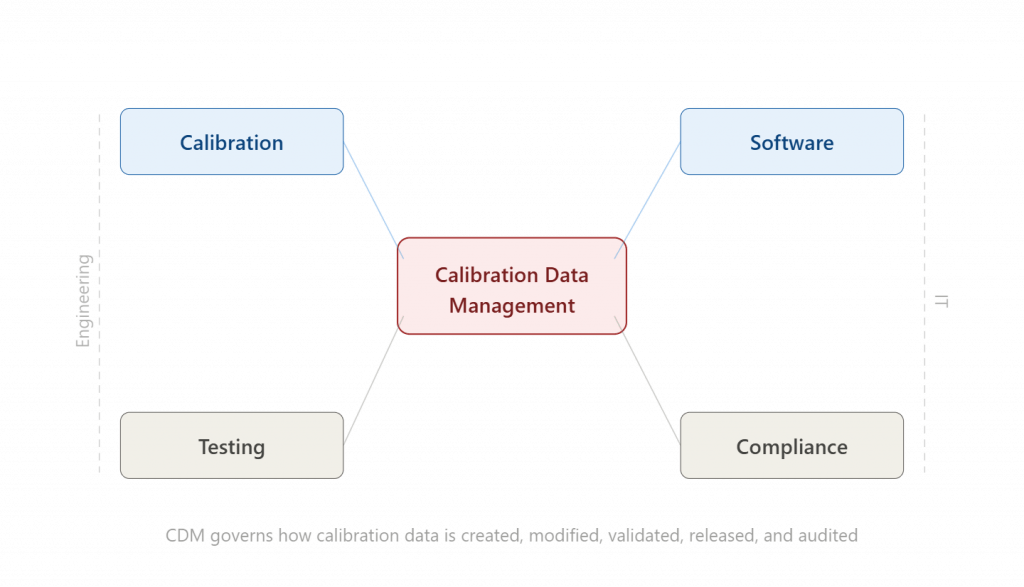
In practice, CDM sits between engineering and IT.
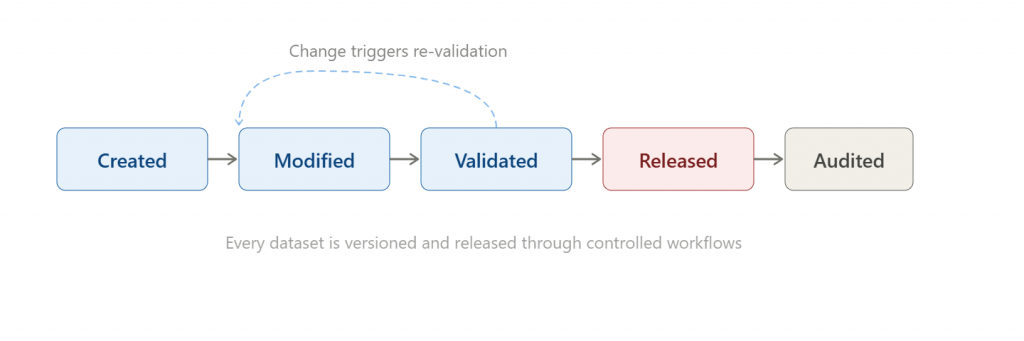
It governs how calibration or configuration data is created, modified, validated, released, and audited.
While the data itself may be ECU parameters, the core problem is generic: managing regulated configuration data that directly affects system behavior.
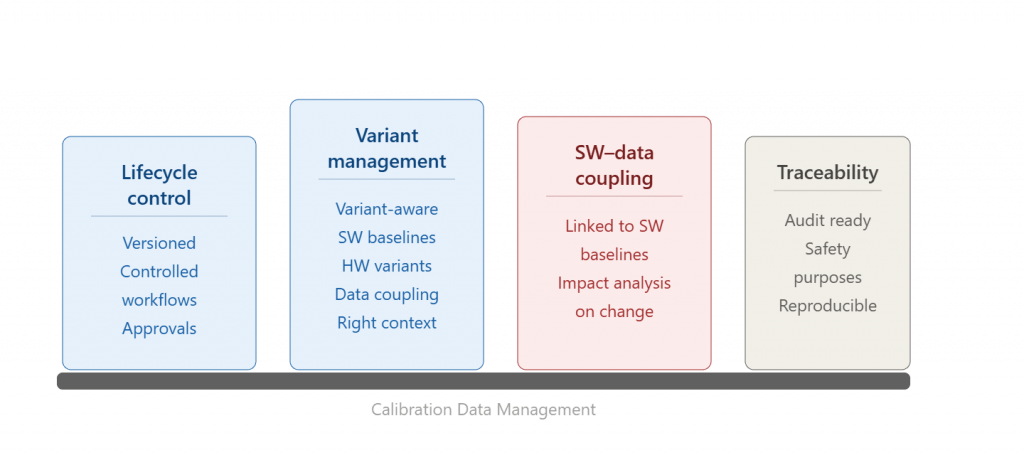
From a technical standpoint, CDM covers four main areas: lifecycle control, variant management, software–data coupling, and traceability.
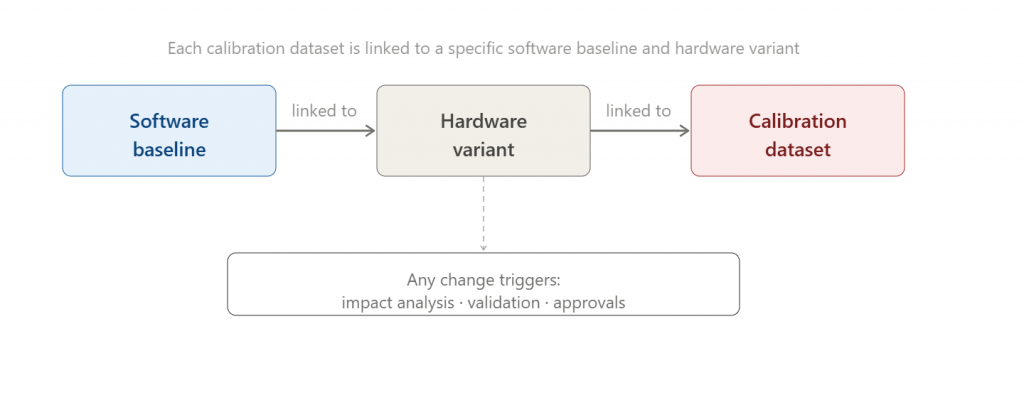
Every calibration dataset is versioned, linked to specific software baselines and hardware variants, and released through controlled workflows.
Any change triggers impact analysis, validation, and approvals, and all actions are traceable for audit and safety purposes.
Think of calibration data like a system’s “behavior configuration”.
Changing it is like changing dosage in a medical device or control limits in a power grid.
CDM ensures the right configuration is used in the right context, and that we can always explain why and how it was changed.
What does Automotive Calibration Data Management (CDM) include?
Automotive CDM typically includes
- Parameter & configuration lifecycle management
- Variant & version management
- Software–data coupling (SW ↔ calibration)
- Change impact analysis
- Traceability & audit readiness
- Toolchain integration
- Working under functional safety & quality standards
- Cross-team coordination (calibration, SW, testing, compliance)
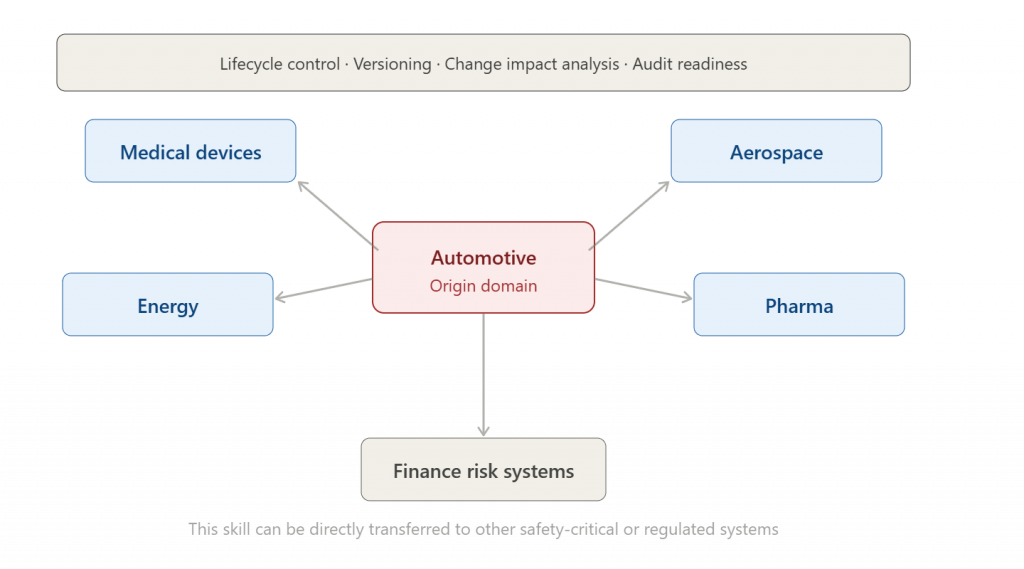
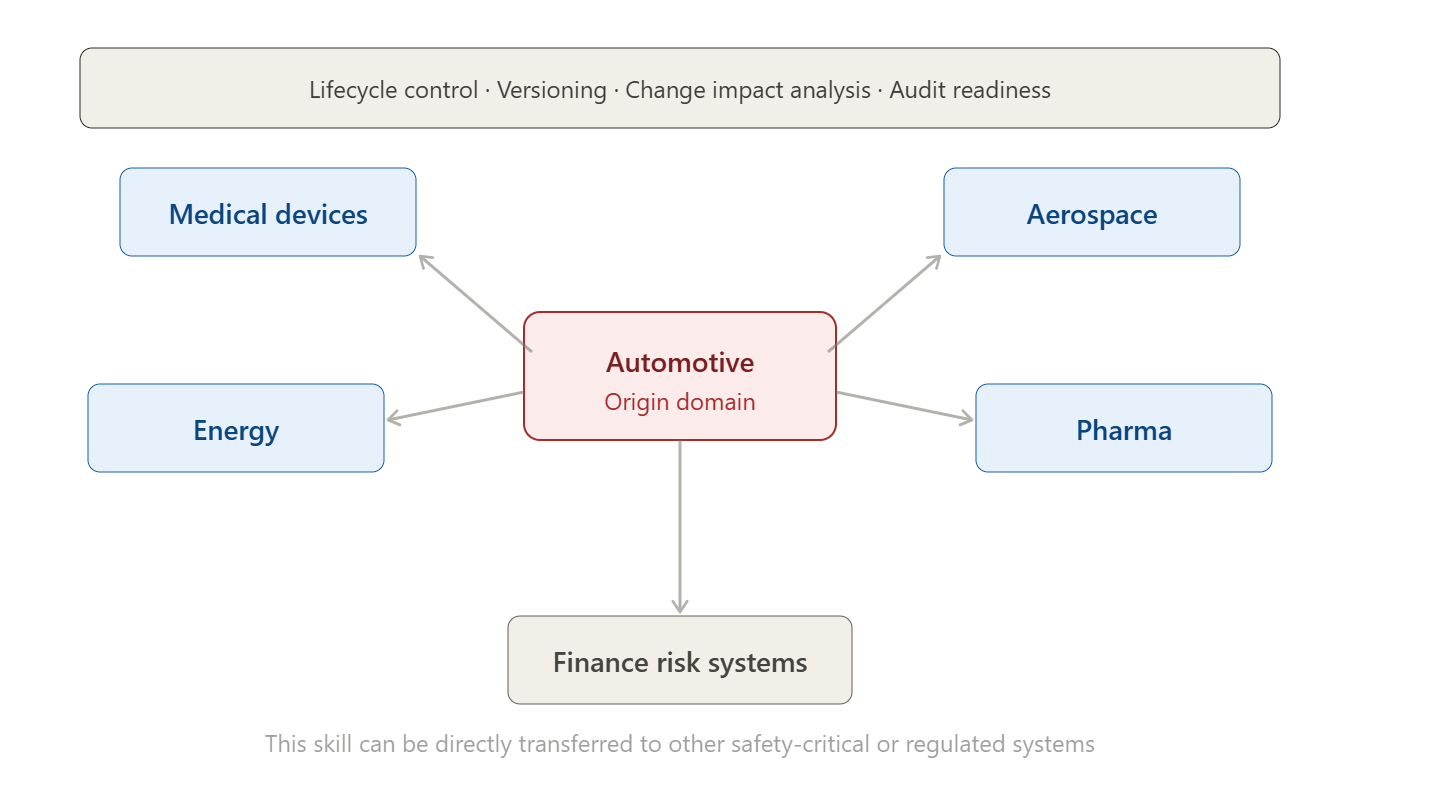
Although CDM is specific to automotive domain, the principles used in CDM– lifecycle control, versioning, change impact analysis, and audit readiness – are domain-independent and apply to any safety-critical or regulated system. This skill can be directly transferred to:
- Medical devices
- Energy
- Aerospace
- Pharma
- Finance risk systems